Securing funding for academic pursuits, research endeavors, or international career development often depends on a single application packet. For international students, researchers, and job seekers navigating competitive global landscapes, understanding the mindset of a selection committee is the most effective way to align your application with their expectations. Committees are rarely looking for absolute perfection; instead, they search for clarity, genuine potential, and concrete evidence that an applicant will maximize the provided resources. Demystifying this evaluation process allows you to approach your writing with intentionality, ensuring every document you submit serves a distinct strategic purpose and contributes to a unified narrative that clearly communicates your value to evaluators who may come from diverse disciplinary backgrounds.
When evaluators sit down to review dozens or even hundreds of candidate files, they operate under strict time constraints and heavy cognitive loads. This operational reality means your application must be exceptionally easy to read, logically structured, and immediately compelling from the opening paragraphs. Reviewers appreciate concise writing that cuts through unnecessary fluff and directly addresses the core prompt without verbose elaboration. By respecting the committee’s time and attention span through clean formatting and direct, purposeful language, you instantly position yourself as a professional candidate who understands how to communicate effectively across cultural, geographic, and institutional boundaries.
The Core Evaluation Criteria
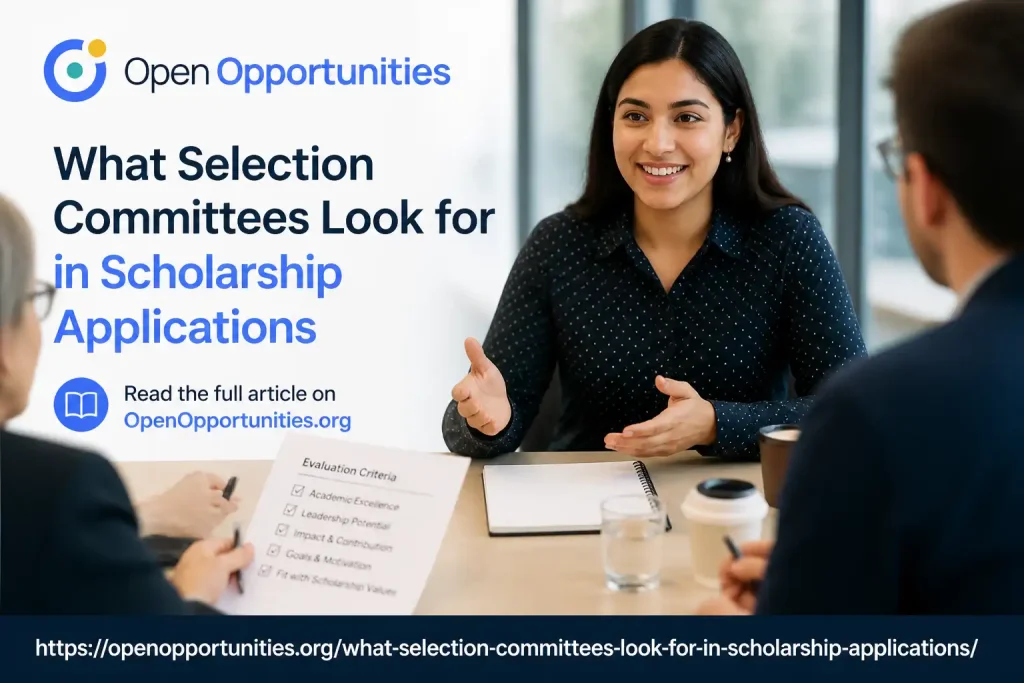
While every funding body, university foundation, and governmental organization has its own unique mission and institutional priorities, most selection committees evaluate candidates across a consistent set of core dimensions. Recognizing these pillars helps you distribute your effort effectively across your personal statements, curriculum vitae, and reference letters. Committees generally want to understand who you are as a person, what you have actually achieved through hard work, and where you intend to go next in your long-term professional, academic, or research journey.
Academic and Professional Merit
Merit extends far beyond high grades, standardized test scores, or prestigious job titles listed on a resume. Committees look closely at trajectory, consistency, and how you personally navigated challenges within your educational or professional environment. If an applicant experienced a temporary dip in academic performance due to socioeconomic hurdles, health issues, or institutional limitations, explaining that context thoughtfully demonstrates resilience and maturity rather than merely showing a numerical score on a transcript. Evaluators value candidates who can reflect on their past obstacles and extract valuable lessons that have actively strengthened their capacity to succeed in more demanding international environments.
Alignment with Organization Goals
A brilliant candidate with stellar credentials can still be rejected if their personal goals do not align cleanly with the funder’s overarching mission. Foundations, universities, and international grant programs invest money to achieve specific institutional outcomes and social impacts. Whether a grant aims to foster cross-cultural dialogue, advance technical research, or support underrepresented leaders in a specific industry, your application must explicitly connect your personal trajectory to the broader objectives of the sponsor. Showing that you have thoroughly researched the organization and understand its foundational values signals that you are genuinely invested in mutual success rather than just seeking generic financial support.
Feasibility and Impact
For researchers and job seekers proposing projects, advanced studies, or specialized training programs, the committee needs to know that your plan is realistic and well-conceived. They assess whether your proposed timeline is achievable, your methodology is sound, and the anticipated outcomes are genuinely valuable to your broader academic field or local community. Vague ambitions rarely survive rigorous review because committees want to fund projects that demonstrate forward-thinking planning, risk awareness, and a clear understanding of potential bottlenecks or resource constraints that might arise during implementation.
Crafting a Compelling Narrative
Beyond meeting the baseline qualifications and eligibility criteria, successful applicants weave their disparate experiences into a cohesive and memorable story. Your curriculum vitae lists your credentials chronologically, but your personal statement must explain the invisible thread connecting those important milestones. Why did you choose your specific academic path? What motivated you to transition from one field to another, or to pursue international mobility despite the inherent logistical challenges? Answering these fundamental questions gives reviewers a clear window into your intrinsic motivation, intellectual curiosity, and long-term dedication, which are traits that heavily influence final selection decisions.
Essential Application Checklist
Preparation requires organizing your materials well in advance of any submission window to avoid frantic last-minute mistakes. Use this concise checklist to ensure your application package is comprehensive, polished, and coherent:
- Tailored personal statement that directly addresses the specific prompt and word count limits.
- Updated curriculum vitae highlighting relevant milestones, skills, and quantifiable achievements.
- Strong, specific letters of recommendation from qualified referees who know you and your work well.
- Proofread drafts free of grammatical errors, typos, or overly generic phrasing.
- Verification of all formatting guidelines, file type restrictions, and official submission requirements.
Common Mistakes to Avoid
Even highly qualified applicants frequently compromise their chances of success by making avoidable errors during the drafting and submission stages. Keep the following pitfalls in mind as you refine your application:
- Recycling a generic essay without customizing it for the specific scholarship or funding body.
- Failing to answer all parts of a multi-tiered essay prompt, leaving obvious gaps in your application file.
- Submitting overly dense technical jargon that obscures your core message from reviewers outside your exact subfield.
- Relying on last-minute proofreading, which often leaves preventable typos and formatting inconsistencies.
- Ignoring instructions regarding file formats, naming conventions, or strict page limits set by administrators.
Ultimately, a successful scholarship application tells a cohesive, honest story about your past achievements and your future potential. By focusing on clear evidence, authentic reflection, and strict adherence to guidelines, you present a professional and compelling case to the selection committee. Treat the application process as an opportunity to articulate your value clearly, and remember that patience, humility, and meticulous revision are your greatest assets when competing on the global stage for competitive opportunities.