Navigating global application processes often brings international students, researchers, and job seekers face to face with two distinct yet frequently confused documents: the personal statement and the statement of purpose. While both serve to introduce an applicant to an admissions committee, hiring manager, or fellowship board, they fulfill entirely different objectives. Submitting a narrative-heavy life story where a rigorous academic roadmap is expected, or vice versa, is one of the most common pitfalls in competitive applications across the globe. Understanding these fundamental differences is the first crucial step toward crafting a successful submission that captures the attention of selection committees.
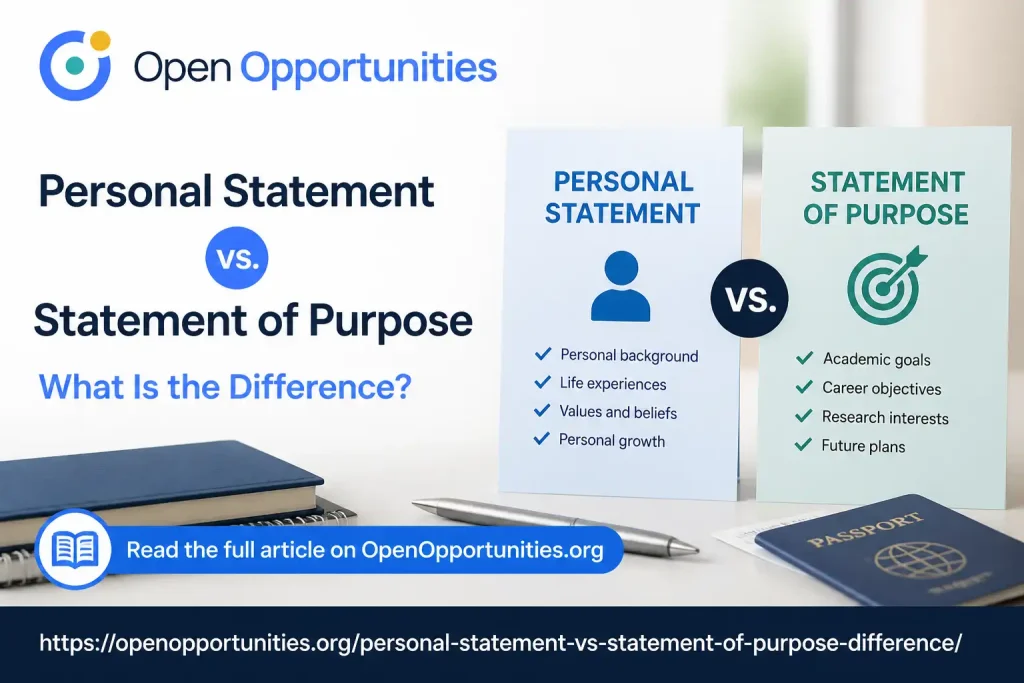
Before putting pen to paper, applicants must grasp the foundational philosophy behind each document. The statement of purpose focuses squarely on your intellectual trajectory, professional goals, and specific reasons for pursuing a particular academic program, research grant, or organizational role. Conversely, the personal statement leans into your individual journey, emphasizing the lived experiences, formative challenges, and character traits that shaped your motivations. Knowing which lens to apply ensures your application hits the precise tone reviewers expect, preventing the mismatch of content that frequently leads to rejection in competitive applicant pools.
Understanding the Core Purpose of Each Document
A clear demarcation of purpose allows you to organize your thoughts and present your background logically. When an organization requests an evaluation of your technical readiness, they are looking for a systematic breakdown of your capabilities, past achievements, and future ambitions within your discipline. When they request a look into your background, they want to understand the human being behind the transcripts and credentials. Blurring these lines often results in an unfocused essay that leaves reviewers wondering about your core qualifications or your authentic motivations.
The Statement of Purpose: Goals and Focus
A statement of purpose acts as a blueprint of your scholarly or professional trajectory. It answers specific questions regarding what you want to study or achieve, why you are qualified, and how the target institution or organization aligns with your long-term roadmap. Reviewers reading an SOP look for concrete evidence of your technical competence, familiarity with the field, and clear understanding of the resources available at the host institution. Every paragraph should build a logical bridge from your past experiences to the specific outcomes you hope to accomplish during your tenure.
- Clear articulation of research interests or career objectives
- Demonstrated familiarity with the target program or organization
- Logical progression of past academic or professional milestones
- Explicit connection between your goals and the host institution’s offerings
The Personal Statement: Narrative and Character
The personal statement shifts the spotlight from your resume to your humanity. It invites readers into your world to understand the obstacles you have overcome, the values you hold, and the unique perspective you will bring to a cohort. This document thrives on storytelling, reflection, and emotional resonance, provided it remains professional and relevant to your overarching ambitions. It is not an invitation to write an autobiography, but rather a targeted narrative about specific moments that molded your character and influenced your professional drive.
- Formative life experiences and defining moments
- Resilience in the face of academic, financial, or personal hardships
- Core values, ethics, and motivations driving your pursuits
- Contributions you intend to make to the community
Key Structural and Thematic Differences
Evaluating these documents side by side reveals distinct contrasts in structure, tone, and content scope. An SOP demands a formal, analytical tone that highlights methodology, scholarly output, and professional readiness. A personal statement permits a more reflective, narrative-driven tone that bridges your background with your aspirations. While an SOP might detail your undergraduate research on renewable energy systems, a personal statement might explore how growing up in an energy-scarce region sparked your lifelong dedication to sustainability. Maintaining this distinction ensures that you do not repeat the same information in both documents if an application requires submission of both essays simultaneously.
For international applicants and global job seekers, navigating cultural nuances in writing can prove challenging. Direct translation of regional writing styles often leads to either overly modest self-assessments or excessive self-aggrandizement. The safest approach focuses on objective evidence backed by authentic reflection. Always read prompt instructions carefully; some applications explicitly ask for a combined essay, requiring a careful balance of both strategic career planning and personal narrative. Adapting your writing style to match the institutional expectations of your destination country is a vital skill that requires patience, research, and careful drafting.
Essential Checklist for Your Application Essays
- Verify whether the prompt asks for a statement of purpose, a personal statement, or a combination of both.
- Ensure your SOP directly addresses why you are applying to that specific institution or role.
- Check that your personal statement highlights unique perspectives without drifting into irrelevant anecdotes.
- Eliminate generic introductory hooks and clichés that fail to add substantive value.
- Proofread meticulously for regional spelling conventions and grammatical precision.
- Confirm that your formatting complies with standard professional guidelines and stated limits.
Common Mistakes to Avoid
- Failing to customize the document for each specific program or organization.
- Treating the statement of purpose as a narrative autobiography.
- Writing a personal statement that reads like a dry list of resume bullet points.
- Exceeding strict word count or page limit constraints through verbose language.
- Neglecting to have native speakers or trusted mentors review the final draft for tone and clarity.
- Relying on generic templates that obscure your authentic voice and specific achievements.
Ultimately, mastering the distinction between these two essays empowers you to present a cohesive, compelling profile. By aligning your intellectual ambitions with your authentic personal narrative, you give reviewers a complete picture of who you are and where you are headed. Approach each document with a clear strategy, respect the specific guidelines provided by the reviewing institution, and take the time to refine your prose through multiple iterations to ensure maximum clarity and impact.