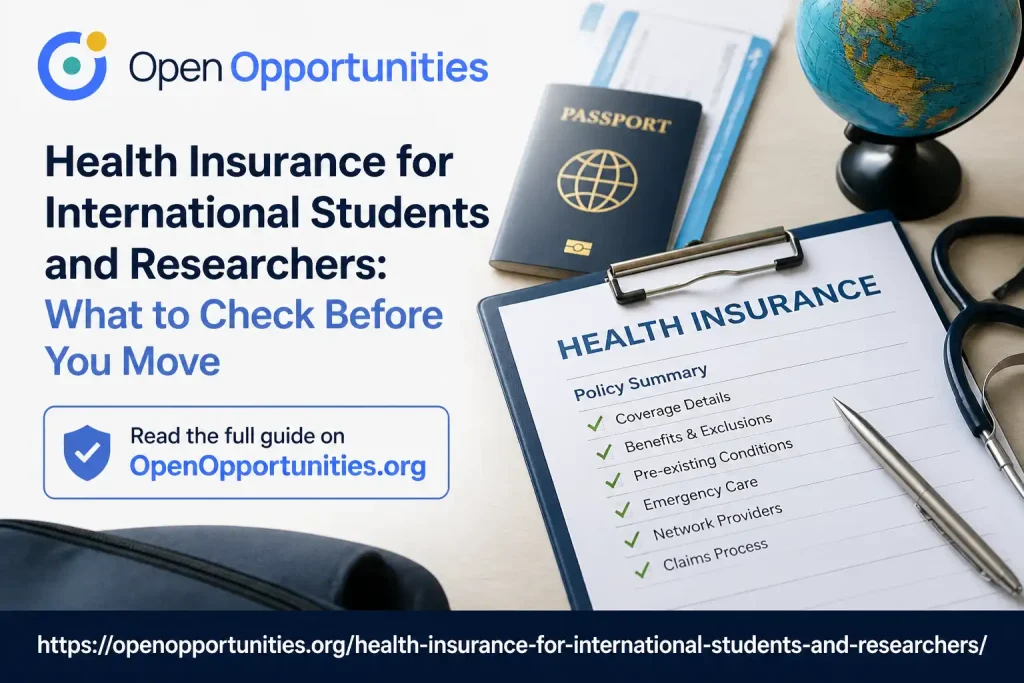
Securing adequate health insurance is one of the most critical steps in preparing for an international academic or research move. Medical costs abroad can quickly become overwhelming, and many host institutions or visa offices require proof of specific coverage before your arrival. Navigating these requirements demands careful attention to detail, as policy structures vary widely depending on the destination country, your visa status, and whether you are enrolled as a student or appointed as a researcher.
When you begin researching your options, you will quickly discover that health systems around the world operate under vastly different financial and administrative frameworks. Some nations rely heavily on centralized public healthcare systems where residents and long-term visa holders are required to contribute through taxes or mandatory fees. Other countries utilize private insurance markets where individuals must purchase commercial policies that satisfy specific government mandates. Understanding which framework applies to your host nation is the foundational step in ensuring compliance and securing your physical well-being throughout your stay.
Understanding Mandatory Versus Optional Coverage
Before purchasing a plan, you must determine whether the host country or institution mandates a specific public health system or allows private insurance. Some nations require all residents, including international students, to enroll in national healthcare programs, while others permit or mandate private coverage that meets strict government standards. Researchers may fall under different regulations than students, often depending on whether they hold employee status, receive a fellowship, or enter on a specialized exchange visa.
Institutional policies often layer additional requirements on top of national visa regulations. A university may require international students to purchase its designated group health plan regardless of whether they already hold private coverage, or they might grant waivers only if an outside policy meets a stringent list of equivalency criteria. It is essential to communicate directly with your international student or scholar office to clarify these institutional mandates before committing financial resources to any external insurance provider.
Key Policy Terms to Verify
- Deductible: The amount you must pay out of pocket before your insurance starts covering costs.
- Co-payment: A fixed fee you pay for specific medical services, such as a doctor visit or prescription.
- Exclusions: Specific medical conditions, pre-existing illnesses, or treatments that the policy does not cover.
- Repatriation of Remains: Coverage for transporting your body back to your home country in the event of a tragedy, which is often a visa requirement.
- Medical Evacuation: Coverage for emergency transportation to a better-equipped medical facility or back home.
Comparing University-Sponsored Plans and Private Providers
Many universities offer group health insurance plans tailored specifically for international students and visiting scholars. These plans often integrate smoothly with campus health centers and satisfy all visa regulations automatically. However, they may not always represent the most cost-effective option for individuals with dependents. Private international insurance providers offer alternative plans that can sometimes cover you across multiple countries if your research involves travel, but you must independently verify that these private options meet the exact legal mandates of your host country.
When weighing university-sponsored options against private alternatives, consider how administrative support is handled. Campus plans often feature dedicated customer service desks that routinely assist international students with claims processing, billing disputes, and local network navigation. Private international insurers, on the other hand, may require you to manage communications across different time zones and handle complex reimbursement paperwork entirely on your own during a stressful medical situation.
Pre-Existing Conditions and Waiting Periods
If you manage a chronic medical condition, evaluating how a prospective insurance policy treats pre-existing conditions is vital. Some comprehensive plans cover pre-existing conditions after a specific waiting period, while others exclude them entirely or require significantly higher premiums. Researchers bringing family members should pay special attention to maternity care, pediatric services, and dependent coverage, as these are frequently subject to strict limitations or separate riders in international policies.
Waiting periods can create significant vulnerability during the initial weeks following your arrival. If a policy imposes a three-month or six-month exclusion on chronic conditions or specific elective treatments, you must plan accordingly by bringing an adequate supply of authorized medications from your home country and identifying local physicians who can provide continuity of care while you wait for full coverage to take effect.
Pre-Departure Health Insurance Checklist
- Confirm the minimum insurance requirements mandated by your visa category and host institution.
- Compare the total cost of university-sponsored plans versus independent international providers.
- Verify coverage limits for emergency medical evacuation and repatriation.
- Check the policy details regarding pre-existing conditions and prescription medications.
- Locate the nearest network hospitals or clinics in your destination city.
- Keep digital and physical copies of your insurance card and policy documents accessible at all times.
Common Mistakes to Avoid
Many international movers make the mistake of assuming standard travel insurance is sufficient for a long-term academic stay. Standard travel insurance is typically designed for short vacations and rarely meets long-term visa requirements or covers routine medical care. Another frequent pitfall is waiting until arrival to secure coverage, which can leave you unprotected during the initial days when travel fatigue and stress are highest. Finally, failing to understand how claims are filed—whether you must pay upfront and seek reimbursement or if the provider pays the clinic directly—can lead to unexpected financial strain.
Another subtle error is neglecting to check whether prescription medications prescribed in your home country are readily available or legally permissible in your destination nation. Certain active ingredients common in one country may be classified as restricted substances or require special authorization elsewhere. Verifying both your insurance formulary and local pharmaceutical regulations ensures that you do not face sudden treatment gaps or severe out-of-pocket expenses for daily medications.
By systematically reviewing your insurance options, understanding policy definitions, and preparing for out-of-pocket expenses before you depart, you can ensure a safer and more secure transition to your new academic environment abroad. Taking the time to double-check every clause, confirm network providers, and align your policy with visa regulations protects not only your finances but also your peace of mind.