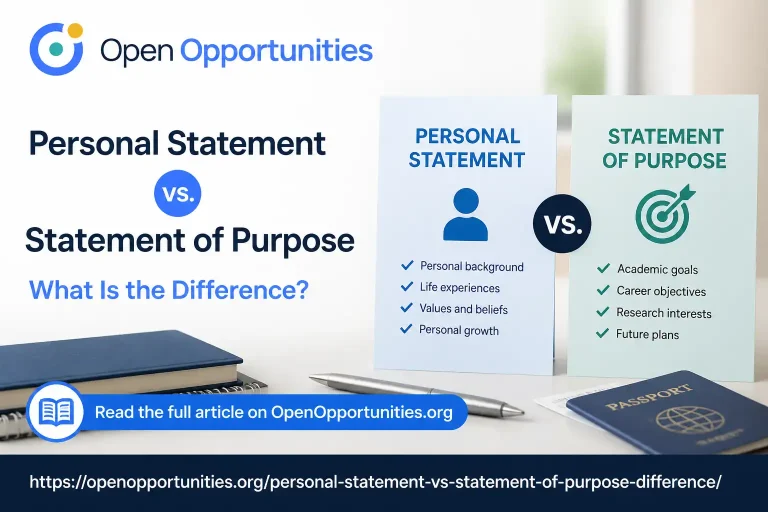
Crafting a compelling Statement of Purpose is one of the most critical steps in the graduate school application process. For international students, researchers, and early-career professionals navigating competitive global admissions, this document serves as your primary voice before an admissions committee. It bridges the gap between your resume and your true potential, allowing you to articulate not just what you have achieved, but why you belong in a specific academic community. When written effectively, the statement weaves together your academic background, technical skills, intellectual curiosity, and future career trajectory into a cohesive and persuasive narrative that showcases your readiness for rigorous study.
Before putting pen to paper, you must understand what admissions committees genuinely look for in a Statement of Purpose. Unlike a standard cover letter, a biographical essay, or a resume summary, this document evaluates your intellectual maturity, your readiness for rigorous advanced study, and your alignment with the faculty and resources of the target institution. Reviewers want to see clear evidence that you can formulate research questions, persist through academic challenges, analyze complex data sets, and contribute meaningfully to the scholarly environment. They are essentially asking themselves whether you will thrive in their department, collaborate well with peers, and successfully complete the program within the standard timeframe while adding value to the academic ecosystem.
Understanding the underlying philosophy of graduate admissions helps you position yourself not merely as a student seeking credentials, but as a junior colleague entering a professional research community. Admissions committees look for individuals who demonstrate scholarly independence, critical thinking, and a clear vision of how advanced training will enable them to solve complex problems in their chosen discipline. Recognizing this dynamic ensures your writing remains focused on intellectual growth and professional development rather than personal storytelling alone.
Structuring Your Narrative Effectively
A successful narrative flows logically from your past experiences to your future goals. While specific program requirements and prompts vary across institutions, most effective statements follow a clear, engaging structure that highlights your unique trajectory without simply repeating your curriculum vitae. Admissions readers spend only a few minutes per file, meaning your structure must be intuitive, highly readable, and focused squarely on your intellectual qualifications and readiness for graduate-level work.
Key Components of the Statement
Your document should generally be organized into several distinct thematic sections, each serving a specific purpose in building your overall case for admission to the target department.
- Introduction: Hook the reader with a defining academic question, a professional turning point, or a technical challenge that sparked your graduate ambitions and defined your path.
- Undergraduate and Research Experience: Highlight key projects, methodologies learned, analytical tools used, and challenges overcome rather than simply listing every course you have taken or grade you have earned.
- Motivation for the Specific Program: Explain why this particular department, lab, research center, or faculty member aligns precisely with your intellectual goals and methodological approach.
- Future Career Trajectory: Conclude with how the degree directly supports your long-term professional, academic, or research objectives, showing a clear vision of your post-graduation impact.
Refining Your Content, Tone, and Perspective
Maintaining an appropriate professional and academic tone is essential for success. Avoid overly dramatic personal anecdotes, emotionally charged language, or excessive self-praise; instead, let your concrete accomplishments, technical proficiencies, and intellectual curiosity speak for themselves. Be precise about your research interests. Vague statements about wanting to change the world or save humanity are far less persuasive than specific explanations of how you plan to investigate a particular subfield, utilize specific analytical techniques, or address an unresolved gap in existing academic literature.
For international students and non-native English speakers, clarity and directness are often more valued than flowery vocabulary or complex idioms. Focus on clear sentence structures, logical transitions between paragraphs, and precise disciplinary terminology. If your academic history includes gaps, lower grades in specific semesters, or shifts in your research focus, use the statement to briefly and objectively contextualize these points without making excuses. Frame challenges as opportunities for growth, resilience, and renewed academic focus, demonstrating that you can bounce back from setbacks with maturity.
Furthermore, balancing confidence with intellectual humility is a hallmark of a strong applicant. Acknowledge the boundaries of your current knowledge while signaling excitement about expanding those boundaries through graduate coursework and independent investigation. Committees appreciate candidates who recognize that graduate school is a training ground where they will refine their skills under expert mentorship, rather than arriving with all the answers already in hand.
Common Pitfalls to Avoid During Drafting
Applicants frequently make avoidable errors that weaken their candidacy, regardless of how strong their test scores or undergraduate transcripts might be. Steering clear of these common missteps will instantly elevate the quality of your submission and keep the focus squarely on your distinct strengths.
- Reciting the resume in paragraph form instead of offering new insights, deeper context, and qualitative reflections on your experiences.
- Failing to tailor the statement to the specific university, department, or faculty members, resulting in a generic essay that could be sent anywhere without modification.
- Exceeding strict word limits, page constraints, or ignoring formatting instructions provided by the admissions office.
- Relying on clichés, overly poetic introductions, or generic statements of passion that lack backing from concrete examples and evidence.
Final Preparation Checklist
Before you hit submit on your application portal, run your draft through a rigorous final verification process. Ensure your tone remains professional, your goals are clearly articulated, and your grammar and mechanics are completely polished for review.
- Confirm that you have answered every prompt question specific to the institution or department.
- Check that all faculty names, research centers, and program titles are spelled correctly throughout the text.
- Verify that your narrative demonstrates both technical capability and genuine intellectual curiosity.
- Obtain constructive feedback from mentors, professors, or advisors familiar with graduate admissions standards.
- Proofread multiple times for typos, formatting inconsistencies, and awkward phrasing that disrupts reading flow.
Ultimately, writing a successful Statement of Purpose is an exercise in self-reflection and strategic communication. By grounding your narrative in concrete experiences, demonstrating deep familiarity with your chosen field, and clearly explaining your motivation for pursuing advanced study, you can present a compelling case to any admissions committee. Approach the writing process early, allow ample time for multiple revisions, and focus on communicating your authentic academic voice clearly.